Drain Field Service in Waco, TX
Drain field service in Waco. We diagnose soggy yards, surfacing effluent, and slow drains tied to failing fields in expansive clay soil.
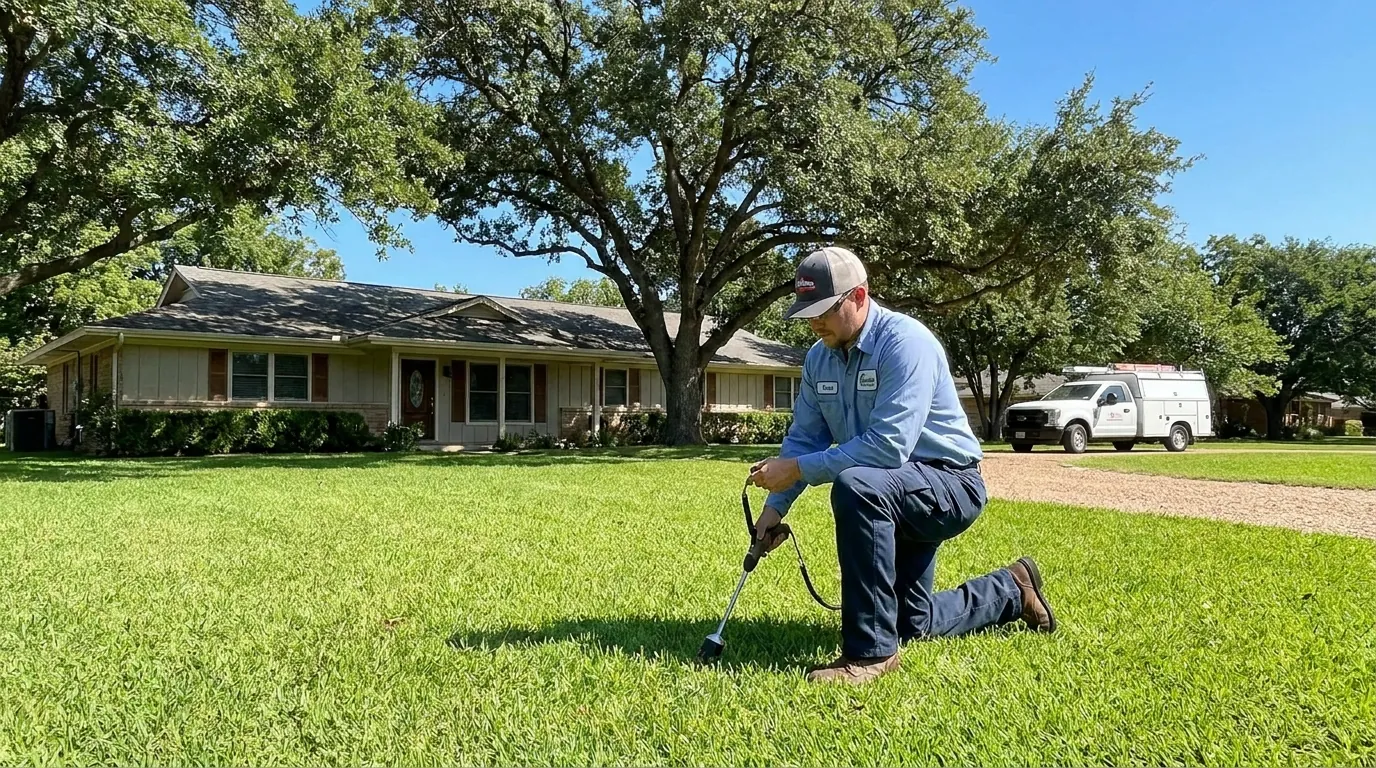
The drain field is the part you cannot afford to lose
Your drain field — also called the leach field — is where treated water from the tank soaks back into the soil. It is buried, out of sight, and by far the most expensive component to replace. When it fails, the whole system fails, and in Waco's clay soil the field is under the most stress to begin with. Protecting it is the entire point of pumping and inspecting the tank.
Warning signs of a struggling field include soggy or spongy ground over the field, water surfacing or pooling above it, a sewage smell outdoors, slow drains throughout the house even after the tank is pumped, and grass over the field that is noticeably greener or faster-growing than the rest of the yard. Any of these means the soil is no longer accepting water the way it should.
Field problems often trace back to the tank. A tank that overflowed solids for years clogs the soil pores; a broken outlet baffle sends scum straight into the field. That is why drain field service starts with confirming the tank is in order through septic tank pumping and a full septic system inspection.
How we approach a drain field problem
Because the field is buried and costly, the goal is accurate diagnosis before any major work.
-
Confirm the tank first
We check that the tank is not the real culprit. A full or baffle-failed tank can mimic field failure, and correcting it is far cheaper than field work.
-
Observe the field surface
We look for surfacing effluent, soggy ground, and vegetation clues, and we factor in recent rain so a temporarily saturated field is not misread.
-
Check levels and flow
A liquid level standing above the tank outlet is a strong sign the field is not accepting water. We use that to separate a tank issue from a soil issue.
-
Reduce the load
Where the field is stressed but not destroyed, easing the incoming load — pumping on time, fixing baffles, spacing out water use — can give the soil room to recover.
-
Explain your options honestly
If the field is truly failing, we explain what that means and what the realistic paths are, without pushing you toward the most expensive option first.
Why Waco clay is hard on drain fields
Expansive clay soil accepts water slowly by nature. In the dry heat of a Waco summer the clay shrinks and cracks; when a sudden storm arrives, it saturates fast and holds water for days. A drain field sitting in that soil has very little buffer — during a wet stretch it may temporarily stop accepting effluent even when nothing is wrong, and a field that is genuinely marginal will tip over into failure.
This is why timing and restraint matter so much locally. Keeping solids out of the field through on-schedule pumping and prompt septic tank cleaning is the best protection our soil allows. If your field is surfacing during or after heavy rain and the smell or backup is spreading indoors, treat it as urgent and see our septic emergency service.
Concerned about your drain field?
Describe what you are seeing in the yard and indoors, and we will help you figure out whether it is the tank, the field, or the weather.
Serving Waco and surrounding towns including Woodway, Bellmead, and Willow Grove.
Frequently asked questions
How do I know if my drain field is failing?
Soggy ground, effluent surfacing over the field, outdoor sewage odor, and slow drains that persist after pumping are the main signs. In Waco, recent heavy rain can cause similar symptoms temporarily, so timing matters in the diagnosis.
Can pumping the tank fix a drain field problem?
Pumping often provides relief and is always the right first step, because a full tank can mimic field failure. If the field itself is clogged or saturated, pumping alone will not be a permanent fix.
Does heavy rain cause drain field problems in Waco?
Our clay soil saturates fast and holds water, so a field can temporarily stop accepting effluent during wet spells. A healthy field recovers as the soil dries; a marginal one may not, which is worth having checked.
How can I protect my drain field?
Pump on schedule, keep solids and grease out of the tank, and avoid overloading the system with water all at once. Keeping heavy vehicles and deep-rooted plants off the field also helps preserve it.