Grease Trap Pumping in Waco, TX
Grease trap pumping for Waco kitchens and food businesses. Keep grease out of your lines and system with scheduled cleaning of the trap.
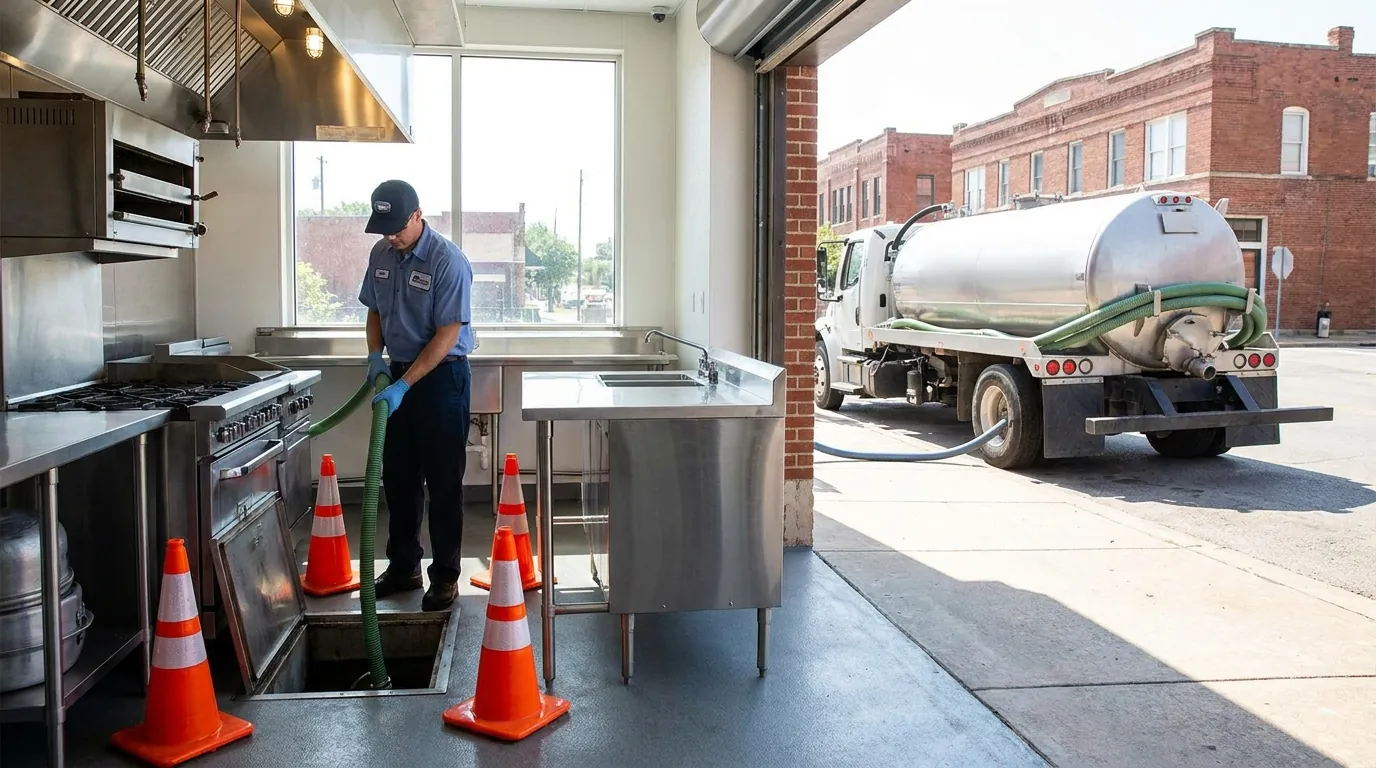
Why grease traps need regular pumping
A grease trap catches the fats, oils, and grease from a kitchen before they enter the plumbing and, on a septic property, the tank and drain field. As grease cools it hardens into a floating layer, while food solids sink. Once the trap fills past a certain point, grease starts carrying through into the lines — and that is where slow drains, foul smells, and clogs begin. Regular grease trap pumping keeps the trap doing its job.
This matters for restaurants and food-service kitchens, but also for busy home kitchens on septic systems. Grease is one of the worst things you can send into a septic tank, because it builds a stubborn scum crust that a routine pump barely removes. In Waco's heat that crust hardens quickly, and any grease that reaches the drain field coats the soil and blocks the water from soaking away.
Keeping grease contained protects everything downstream. If grease has already made it into a septic tank, a full septic tank cleaning is often needed to remove the hardened crust it leaves behind.
What grease trap pumping involves
The service is straightforward, but doing it on schedule is what prevents problems.
-
Open and assess the trap
We open the trap and check how full the grease and solids layers have grown. That tells us whether your current schedule is keeping up with your volume.
-
Pump out grease and solids
We remove the full contents — the floating grease cap and the settled food solids — not just skim the top, so the trap regains its capacity.
-
Scrape and clear the walls
We clear built-up grease from the trap walls and baffles where it clings, since that hardened residue is what starts carrying into your lines.
-
Check inlet and outlet
We make sure the inlet and outlet are clear so the trap continues to separate grease properly after service.
-
Advise on frequency
Based on how full the trap was, we suggest a realistic interval so the trap never overflows into your plumbing between visits.
Waco heat and grease buildup
Grease behaves differently in our climate. Long, hot Waco summers keep grease more fluid on the way into the trap, so it flows deeper before it cools and sets — and once it sets, the crust is thick and stubborn. High-volume kitchens can fill a trap far faster than they expect during the busy, hot months, which is why a fixed interval that worked in winter may fall short in summer.
On septic properties, staying ahead of the trap protects the whole system. Grease that escapes into the tank shortens the interval on your septic tank pumping and threatens the clay drain field. When in doubt, a quick septic system inspection will show whether grease is already reaching the tank.
Set up grease trap service
Tell us your trap size and how heavy your kitchen volume runs, and we will recommend a pumping schedule that keeps it ahead of trouble.
Serving kitchens across Waco, Bellmead, Hewitt, and nearby areas.
Frequently asked questions
How often should a grease trap be pumped?
It depends on trap size and how much grease your kitchen produces; high-volume kitchens need it far more often. We measure how full the trap was at each visit and adjust your interval so it never overflows into the lines.
What happens if I skip grease trap pumping?
Grease carries past a full trap into your plumbing, causing slow drains, odors, and clogs. On a septic system it also loads the tank with grease, which hardens into a crust and threatens the drain field.
Do home kitchens on septic need grease trap service?
Many do, especially busy kitchens that produce a lot of cooking oil and fat. Keeping grease out of the septic tank protects the tank and the clay drain field that is so unforgiving in Waco.
Does grease in the septic tank need special cleaning?
Yes. Grease builds a hardened scum crust that a routine pump-out barely removes, so a full septic tank cleaning is often the right way to clear it.