Septic Tank Pumping in Waco, TX
Septic tank pumping service in Waco and nearby towns. Learn the warning signs, what pumping involves, and how local clay soil affects your schedule.
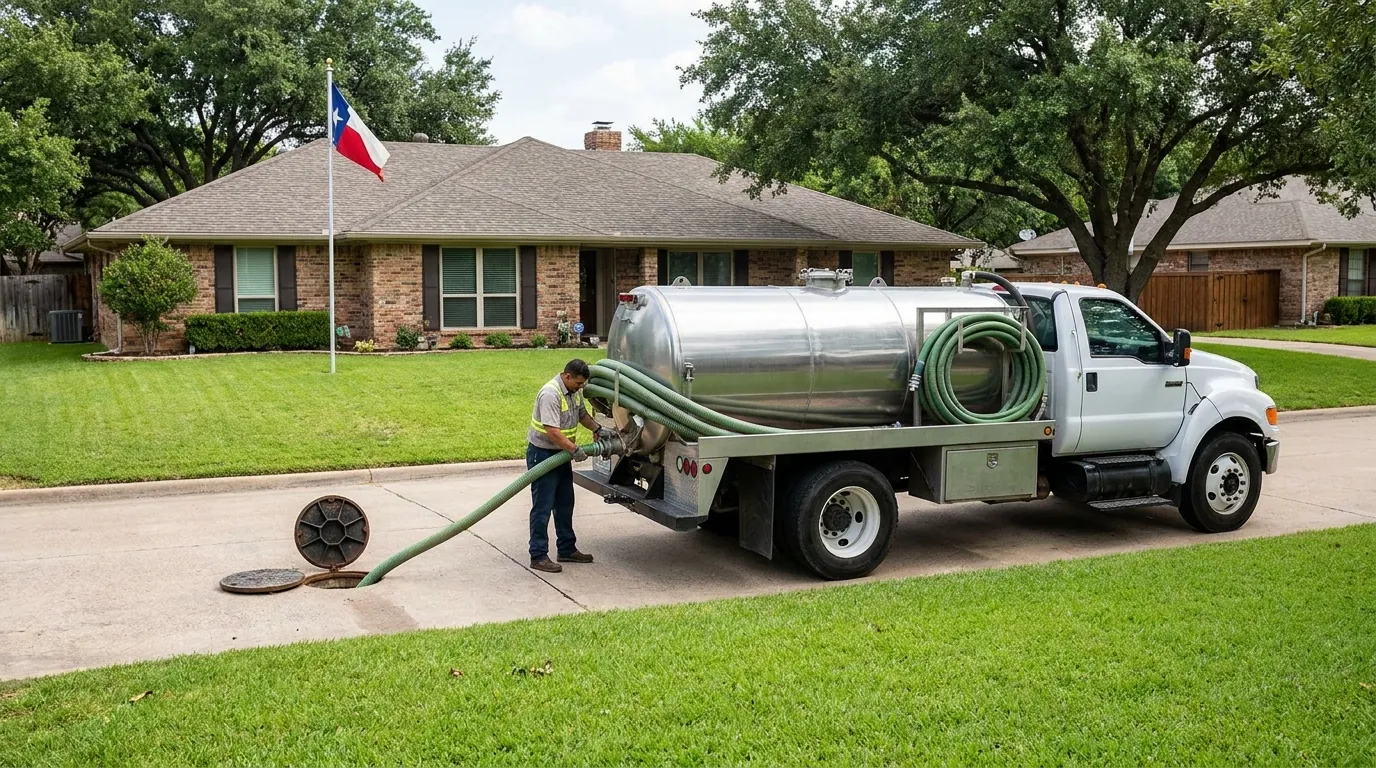
When your Waco septic tank needs pumping
Every septic tank fills with solids over time. Wastewater flows in, bacteria break down what they can, and the leftover sludge settles to the bottom while grease and lighter material float to the top. Pumping removes that accumulated layer before it reaches the outlet and pushes solids into your drain field — which is the expensive part of the system to replace. Regular septic tank pumping is the single cheapest thing you can do to keep the whole system working.
In and around Waco, the timing question is complicated by our soil. Expansive clay holds water and drains slowly, so the drain field has less margin for error than sandy ground would. When solids escape a neglected tank, they clog the soil pores in a field that was already slow to accept water. That is why we treat pumping frequency as a local question, not a one-size-fits-all number.
If you have noticed slow drains across the whole house, gurgling toilets, or a faint sewage smell near the tank or field, those are classic signs the tank is overdue. This page walks through what the work involves and how to decide your schedule. If something is actively backing up, skip ahead to our septic emergency service.
What septic tank pumping involves
A typical pumping visit follows the same basic sequence, adjusted for how your tank is built and where it sits.
-
Locate and uncover the access lids
We find the tank and expose the inlet and outlet access ports. Many older Waco properties have lids buried under several inches of soil or sod, so part of the visit is simply getting to them without damaging the tank.
-
Measure the sludge and scum layers
Before pumping, we check how thick the bottom sludge and top scum layers have grown. This tells you whether your current interval is right, too long, or could safely be stretched.
-
Pump the full tank
We pump both the solids and the liquid so the tank is emptied completely, not just skimmed. A full pump-out resets the accumulation clock and lets us see the tank walls and baffles.
-
Inspect baffles and outlet
With the tank empty we look at the inlet and outlet baffles or tees. A missing or broken outlet baffle lets scum flow straight to the drain field, so catching it during pumping saves a bigger repair later.
-
Backfill and note your next date
We reseal the lids, backfill, and give you an honest window for your next pumping based on what we measured — not a generic reminder.
How Waco soil and weather change the schedule
The expansive clay common across McLennan County swells when wet and shrinks when dry. During our hot summers the ground pulls back from the tank and pipes; after a sudden storm it saturates fast and holds water around the drain field. A tank that is already near capacity has no buffer when the surrounding soil cannot accept its normal outflow, and that is when backups happen.
Households pumping on a fixed calendar sometimes find the clay has quietly shortened their real interval. Water use matters too — more people, a garbage disposal, or a laundry-heavy week all push solids up faster. Pairing pumping with a periodic septic system inspection is the most reliable way to keep your interval honest. For badly grease-loaded or long-neglected tanks, ask about full septic tank cleaning rather than a routine pump-out.
Ready to schedule a pump-out?
Tell us your household size and how long it has been since the last service, and we will give you a realistic window and a clear price range before we come out.
Serving Waco and nearby towns including Woodway, Hewitt, and Robinson.
Frequently asked questions
How often should I pump my septic tank in Waco?
Most Waco-area households land somewhere between every three and five years, but the clay soil and your water use can shorten that. The only way to know your real interval is to measure the sludge layer, which we do on every visit.
What does septic tank pumping cost?
Price depends on tank size, how accessible the lids are, and how much solid has built up. We give a range before the visit; a badly overdue tank that needs extra water or digging costs more than a routine pump-out.
Can I pump the tank myself?
No. Septic waste requires a vacuum truck and proper disposal at an approved facility. Attempting it yourself is unsafe and illegal to dispose of, so this is a job for a pumping service.
Does pumping fix a backed-up drain field?
Pumping gives temporary relief and is the right first step, but if the field itself is failing you may also need drain field service. We check the outlet baffle and field behavior during the visit and tell you what we see.
How do I know the tank was fully emptied?
We pump both liquid and settled solids and can show you the empty tank and its baffles. A skim-only job leaves sludge behind and shortens your next interval, so a complete pump-out is what you should expect.