Septic Emergency Service in Waco, TX
Septic emergency service in Waco for backups, overflows, and surfacing sewage. What to do first and how we respond to urgent septic failures.
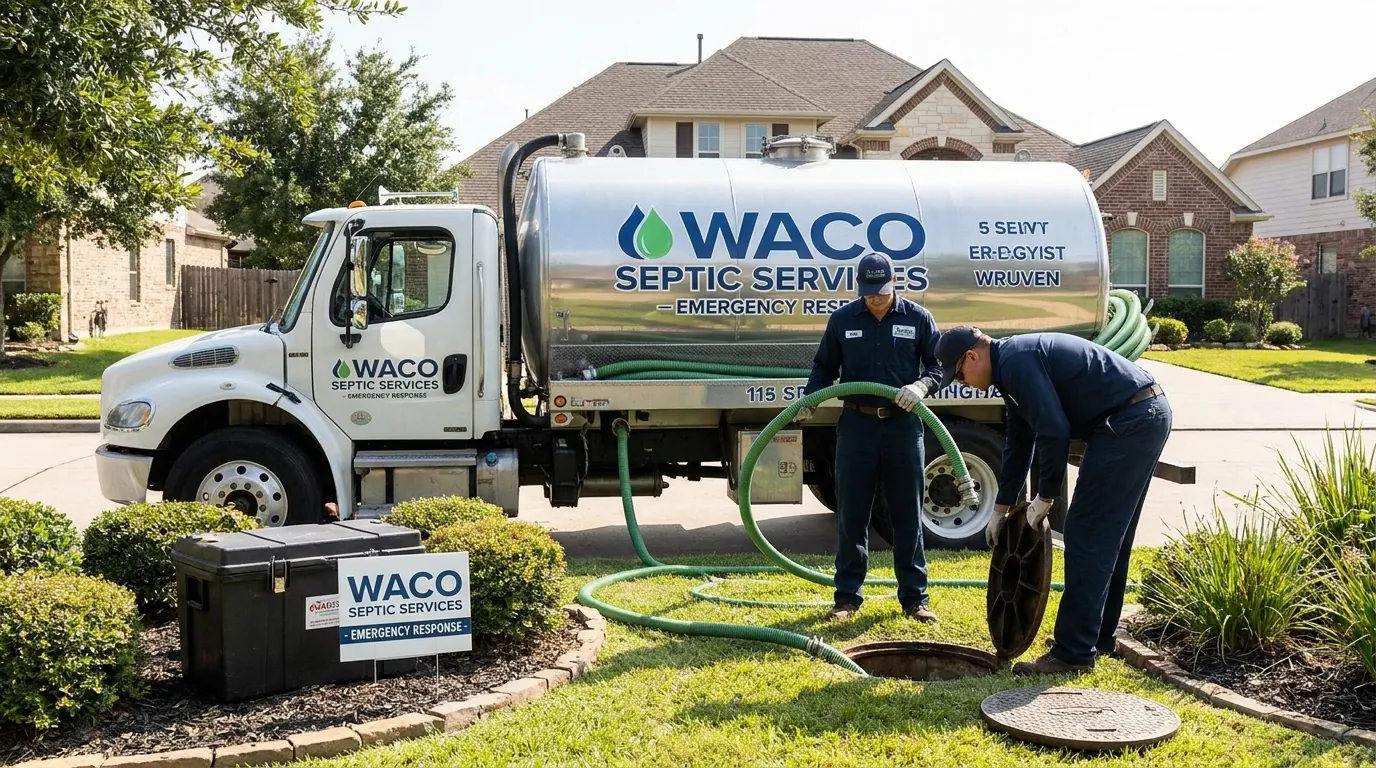
When a septic problem becomes an emergency
Some septic issues can wait for a scheduled visit; others cannot. Sewage backing up into tubs, sinks, or floor drains, effluent overflowing at the tank, or wastewater surfacing in the yard are health hazards that need attention now. So is a complete inability to drain any fixture in the house. When any of these is happening, the priority is stopping the flow, protecting your family, and getting the system pumped down before it spreads.
The most common trigger in the Waco area is a tank that filled past capacity — often combined with a saturated drain field after a sudden storm. The clay soil cannot accept the tank's outflow, the tank has nowhere to send its liquid, and everything backs up toward the house. That combination can turn a tank that seemed fine last week into an active emergency overnight.
While you wait, stop using water everywhere in the house — every flush and every load of laundry adds to what has nowhere to go. Keep people and pets away from any surfaced sewage. Once the immediate crisis is handled, an emergency almost always points to an underlying cause we will need to trace with a full septic system inspection.
How we handle a septic emergency
The order matters: relieve the pressure first, then find out why it happened.
-
Stop the immediate hazard
The first move is to pump the tank down so the backup or overflow stops. That relieves pressure on the house and the yard right away.
-
Identify the trigger
We look at why it happened — an overdue tank, a failed baffle, a saturated drain field, or a blockage — so the fix addresses the cause, not just the symptom.
-
Check the drain field
Because a saturated clay field is a frequent Waco cause, we assess whether the field contributed, which changes what you should do next.
-
Clear or clean as needed
Depending on what we find, the tank may need a full clean-out rather than a routine pump, especially if solids or grease overwhelmed it.
-
Plan to prevent a repeat
We give you a straight explanation of what caused the emergency and what schedule or repair will keep it from happening again.
Waco storms and sudden septic failures
Our sudden, heavy storms are a leading reason septic emergencies cluster in the Waco area. Expansive clay saturates within hours and holds water for days, so a drain field that normally accepts effluent slowly can stop accepting it entirely during a wet spell. A tank that was already near full then has nowhere to send its liquid, and the backup follows fast. Hot, dry stretches cause the opposite problem, cracking the clay and shifting pipe connections until a joint fails.
Staying ahead of emergencies is mostly about not letting the tank run to the edge. On-time septic tank pumping and prompt attention to any drain field service warning signs are what keep a bad storm from turning into a backup indoors. If you are past that point already, do not wait — the longer sewage sits, the more it spreads and the more it damages.
Have an active septic emergency?
If sewage is backing up or surfacing, stop running water and reach out right away — describe what is happening and we will move to relieve the situation as quickly as we can.
Emergency response across Waco and nearby towns including Woodway, Robinson, and Gholson.
Frequently asked questions
What counts as a septic emergency?
Sewage backing up into the house, effluent overflowing the tank, or wastewater surfacing in the yard all count, as does a complete inability to drain any fixture. These are health hazards that should not wait for a scheduled visit.
What should I do while I wait for help?
Stop using all water in the house, since every flush and load adds to what has nowhere to go. Keep people and pets away from any surfaced sewage and avoid contact with it.
Why do septic backups spike after heavy rain in Waco?
Our clay soil saturates fast and holds water, so the drain field can stop accepting the tank's outflow during a storm. A tank already near capacity then backs up toward the house.
Will pumping fix the emergency for good?
Pumping stops the immediate backup, but an emergency almost always has an underlying cause like an overdue tank, a failed baffle, or a struggling field. We identify that cause so it does not simply happen again.