Septic Tank Cleaning in Waco, TX
Septic tank cleaning in Waco removes hardened sludge and scum a routine pump-out leaves behind. Learn how cleaning differs from pumping.
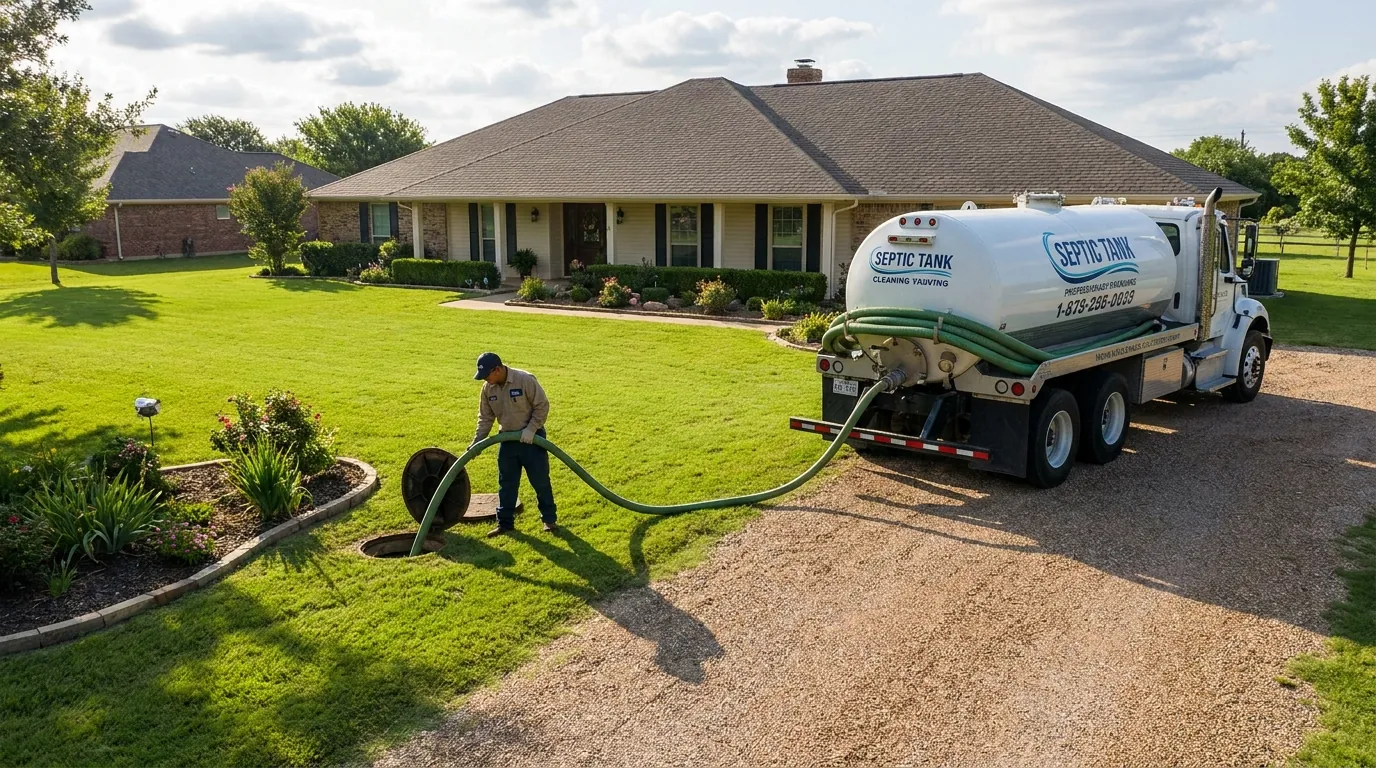
Cleaning a septic tank versus pumping it
People use the words interchangeably, but there is a real difference. A routine pump-out removes the liquid and the loose solids. Cleaning a septic tank means getting the hardened sludge that has compacted at the bottom and the thick scum crust at the top — the material a quick pump leaves behind. When a tank has gone years without service, that packed layer can occupy a large share of the tank and no longer break down on its own.
Cleaning the septic tank usually involves backflushing water into the tank to break up and suspend the compacted solids so they can be vacuumed out. Done right, it returns the tank close to its original working volume and lets the bacteria colony recover. In Waco, where clay soil punishes any solids that reach the drain field, a proper cleaning matters because it keeps that heavy material from ever leaving the tank.
Cleaning is the right call for neglected tanks, tanks with heavy grease loading, and any tank where a septic system inspection found a thick, hardened sludge layer. For a tank on a normal schedule, standard septic tank pumping is usually all you need.
How we clean a septic tank
Cleaning goes further than a standard pump-out, so the steps reflect that.
-
Assess the buildup
We measure how compacted the sludge and scum have become. A tank that pumps easily may just need pumping; a hardened, crusted tank calls for cleaning.
-
Pump the liquid and loose solids
We first remove everything that comes out readily, which exposes the packed material at the bottom and the crust on top.
-
Break up compacted material
Using water and agitation, we loosen the hardened sludge and scum so it can be suspended and drawn out rather than left stuck to the tank floor and walls.
-
Vacuum the tank clean
We remove the suspended material until the tank is genuinely clean, not just emptied of liquid, restoring its working capacity.
-
Check the tank and baffles
With everything removed we can see the tank interior clearly and flag cracks, corroded baffles, or root intrusion that need attention.
Waco conditions that call for a full cleaning
Our hot summers encourage grease and scum to build a thick, stubborn crust, and households with garbage disposals or heavy cooking oil habits accelerate it. Once that crust hardens, a routine pump barely touches it. Meanwhile the expansive clay drain fields around Waco cannot tolerate escaping solids, so any material that slips past a scum-choked outlet does real damage to the soil.
If your tank is years overdue, has never been cleaned, or is showing slow recovery after pumping, a full cleaning is the safer reset. If solids have already reached the field, we will also assess whether you need drain field service to address the soil side of the problem.
Schedule a septic tank cleaning
Tell us the last service date and any symptoms, and we will advise whether a routine pump-out or a full cleaning fits your tank.
Serving Waco and nearby communities including Hewitt, Robinson, and Gholson.
Frequently asked questions
What is the difference between septic tank cleaning and pumping?
Pumping removes liquid and loose solids; cleaning also removes the hardened sludge and scum crust that a quick pump leaves behind. Cleaning restores more of the tank's original working volume.
How do I know if I need cleaning instead of pumping?
If the tank is years overdue, heavily grease-loaded, or an inspection found a thick, compacted sludge layer, cleaning is the better choice. On a normal schedule, standard pumping is usually enough.
Will cleaning hurt the good bacteria in my tank?
A properly cleaned tank recovers its bacteria colony as normal use resumes; you do not need to add commercial additives. Removing the heavy compacted solids actually helps the healthy process work.
How often does a tank need a full cleaning?
Many tanks never need more than routine pumping if they are serviced on time. Cleaning becomes necessary mainly when a tank has been neglected or is exposed to heavy grease loading.